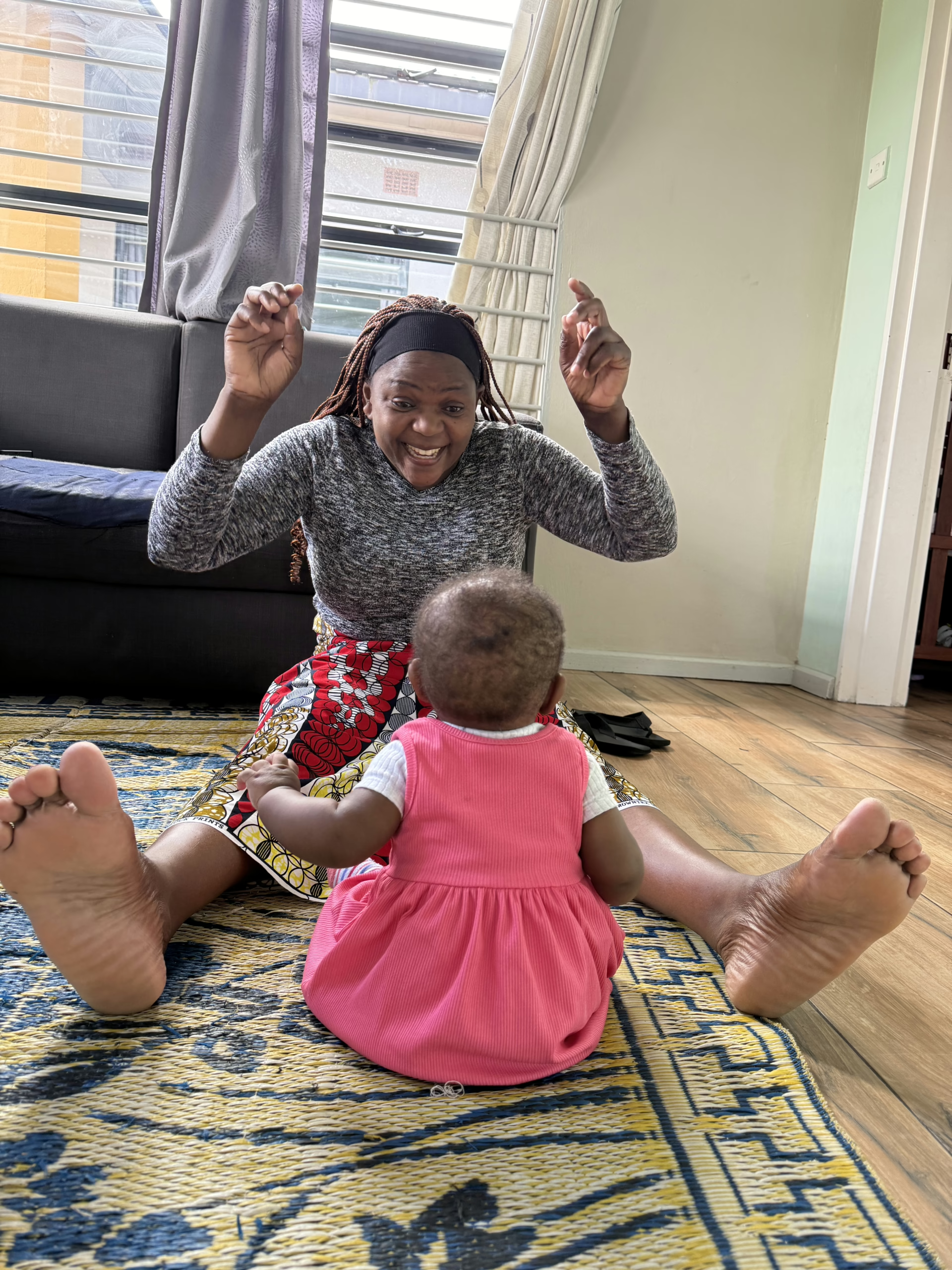

At first glance, the Baby Homes look safe, clean, and peaceful. Tiny beds are neatly made. Babies are cared for by devoted mamas. There is structure, warmth, and consistency.
And that’s exactly where the misunderstanding begins.
Because when something looks stable, it’s easy to assume the urgency is gone. But behind every crib is a story that began in crisis. And the need for infant rescue has not slowed down.
The Hidden Reality Behind Every Rescue
Every child in the Baby Homes arrives because something has gone deeply wrong.
Every child in our care is brought to us through the Zambian government’s social workers, often after being found abandoned or rescued from dangerous and life-threatening situations. These are not rare exceptions. They are ongoing realities.
Baby J was nine months old when she was referred for care. Her father had died, and her home life was marked by alcohol abuse, domestic violence, and inconsistent care. Born underweight and struggling with early health complications, she arrived severely undernourished. She now requires ongoing medical attention and nutritional support to recover and grow.
Baby S entered care at just two weeks old. His mother, still a teenager, had grown up without family support and was unable to safely care for him. With no relatives to step in, Baby S was admitted into care weighing only 6 pounds and suffering from neonatal jaundice. Today, he is receiving the medical care he needs, while efforts are made to preserve the bond with his mother.
These stories are difficult to read. They should be. As noted in past ministry updates, some infants have been rescued from extreme and life-threatening conditions, including abandonment in unsafe environments.
This is why the Baby Homes exist. Not as long-term solutions, but as emergency rescue.
Why the Need Has Not Slowed Down
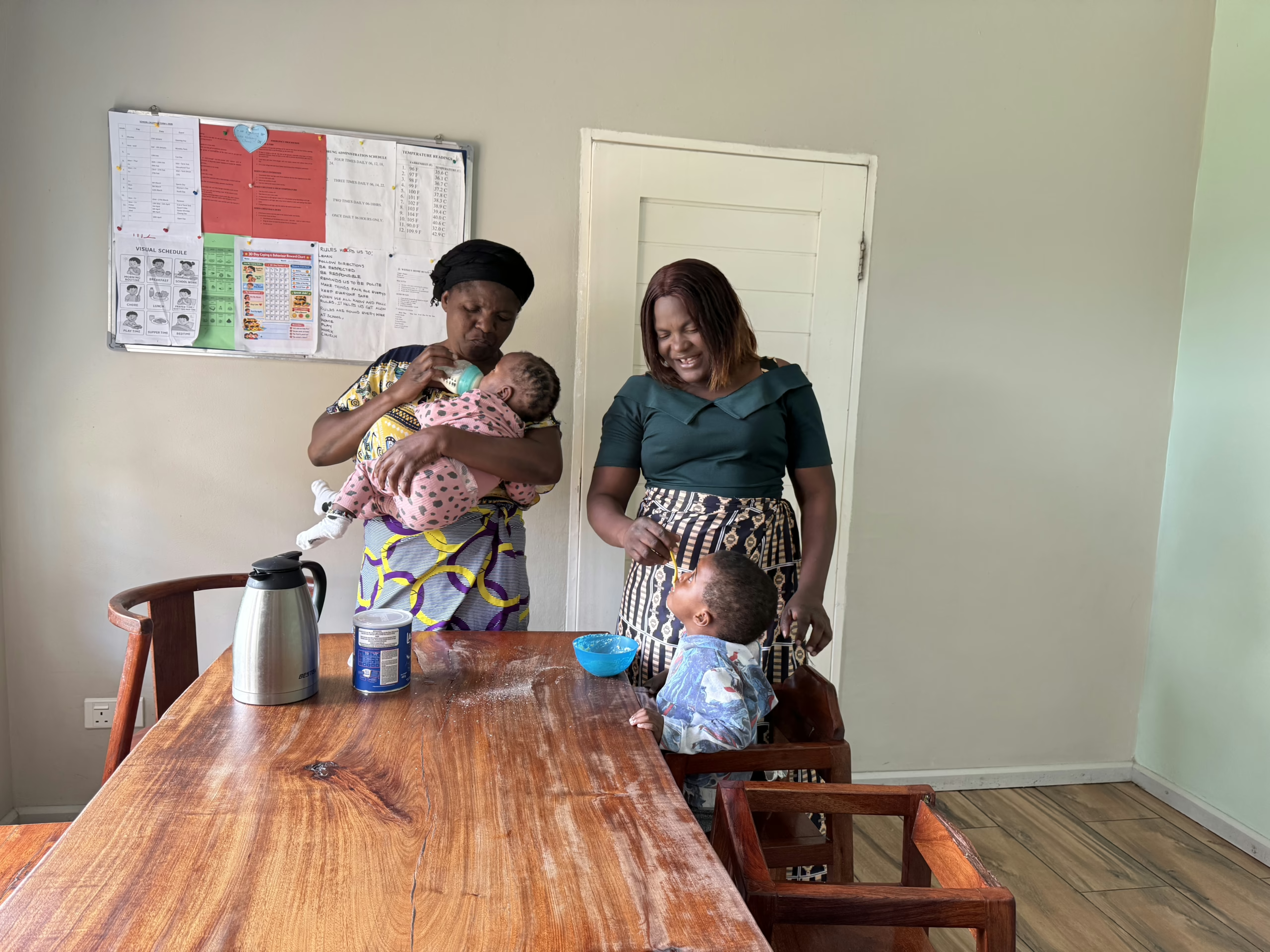
There is a growing perception that because the facilities are well-run and the children are cared for, the need must not be as urgent as it once was. In reality, the opposite is true.
The quality of care does not reduce the need. It reveals the commitment to meet it.
The Baby Homes have the capacity to care for up to 40 babies at any given time. Currently, 32 children are in our care, each staying an average of 1.5 years as they move toward a permanent family solution. Although the home has a limited number of beds at one time, children transition in and out of care, enabling us to care for approximately 60 babies over the course of a year.
This means the need is not static. It is ongoing. And in many cases, it is increasing.
What Happens After Rescue
Rescue is only the beginning.
From the moment a baby enters the Baby Homes, a long-term plan begins to take shape. Social workers work diligently to identify the best possible outcome for each child. Whenever possible, that outcome is family.
Today, 63.7% of children are successfully reintegrated into their biological families, while others continue their journey through adoption (9.5%) or transition into Family Homes (21.8%). A small percentage, 4.5%, represent the most vulnerable cases who tragically do not survive.
This is a critical part of the mission. Because the goal is not just to rescue a child, but to restore them to a place where they can belong. In other cases, children may be adopted locally or transition into Family Homes where they are raised in a stable, long-term environment.
Each path requires time, resources, and intentional care. And none of it happens without sustained support.
The Tension Between Dignity and Urgency
Every Orphan’s Hope has made a deliberate choice to communicate with dignity.
That means you won’t see images that exploit suffering or reduce children to their worst moments. Instead, you see children who are clean, cared for, and safe. But there is a tension in that approach.
When people only see the stability, they can assume the problem has already been solved. The Baby Homes can appear “too nice,” leading some to believe that support is no longer urgently needed.
The truth is both things are happening at once.
Children are being rescued from crisis situations. And they are being cared for to the highest standards. One does not cancel out the other.
Why Sustained Support Matters
Infant rescue is not a one-time moment. It is a continuous commitment.
Each child requires:
- Immediate medical care
- Daily nutrition and safe housing
- Emotional bonding and developmental support
- Social work intervention for long-term placement
And this care often spans months or even years. The Baby Homes currently face an annual funding gap of approximately $200,000, making it one of the most under-resourced areas of the ministry.
This gap exists not because the need is small, but because it is often misunderstood. It is easy to rally around visible crises. It is harder to sustain support for ongoing care that quietly changes lives every day. But without that sustained support, rescue cannot continue.
The Reality We Cannot Ignore
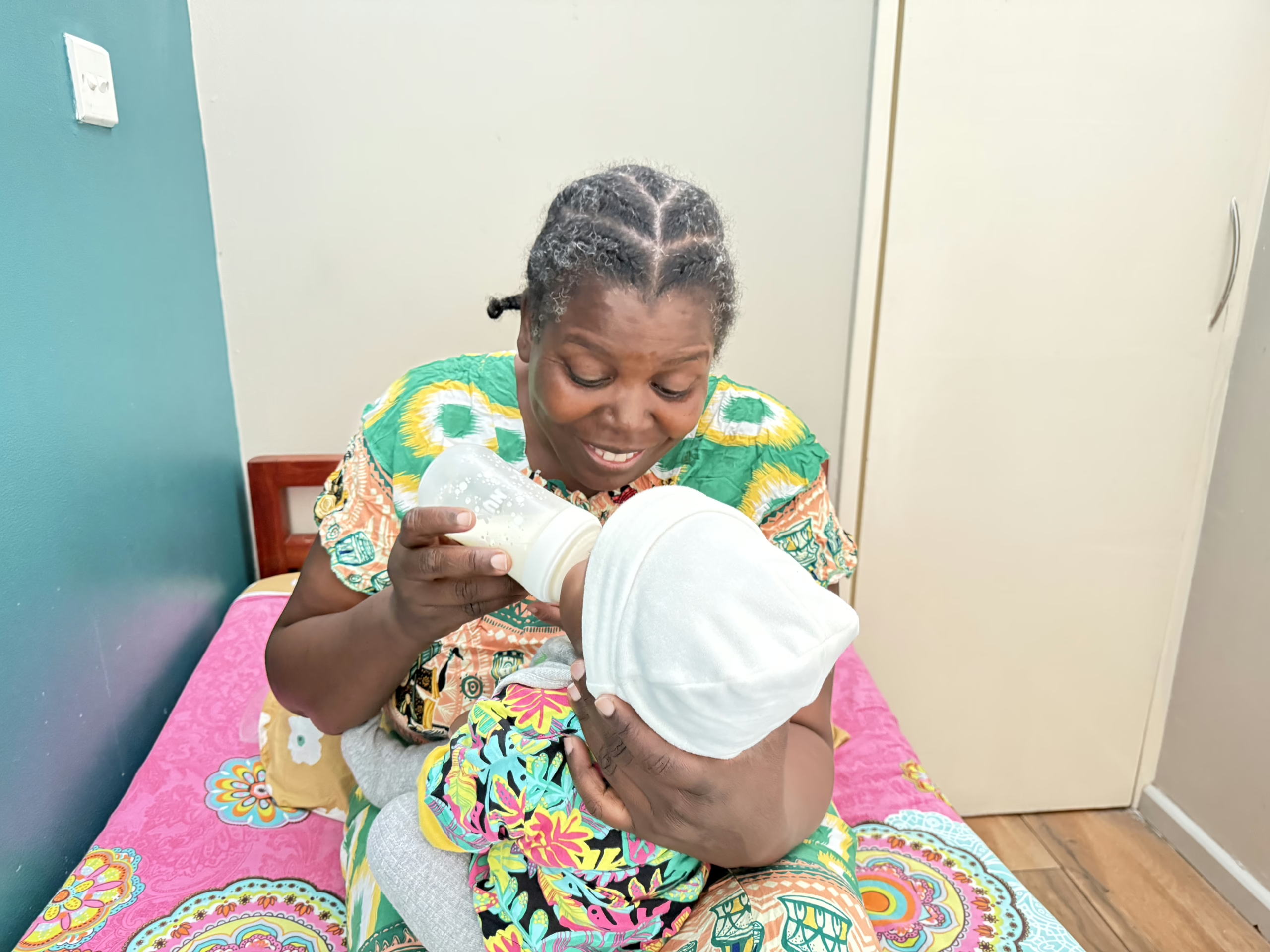
For every baby currently in care, there are others still waiting. Waiting in situations of extreme poverty, abandonment, or danger. Waiting for someone to step in.
The Baby Homes are not full because the problem has been solved. They are full because the need continues.
And each time a child is safely reintegrated or placed into a family, space is made for another rescue. That cycle only works if support remains steady.
How You Can Be Part of the Solution
This is where you come in. Your support does more than meet a budget need. It keeps the rescue mission active. It ensures that there is space when the next call comes. There are resources. There is a plan. Most importantly, it ensures that a child in crisis is not left without hope.
A Final Thought
It is good that the Baby Homes feel safe. It is good that they reflect dignity, stability, and care. That is the outcome every child deserves. But we cannot let that outcome hide the reality that made it necessary. Behind every peaceful room is a story that began with a potentially life-threatening urgency. And that urgency is still here.